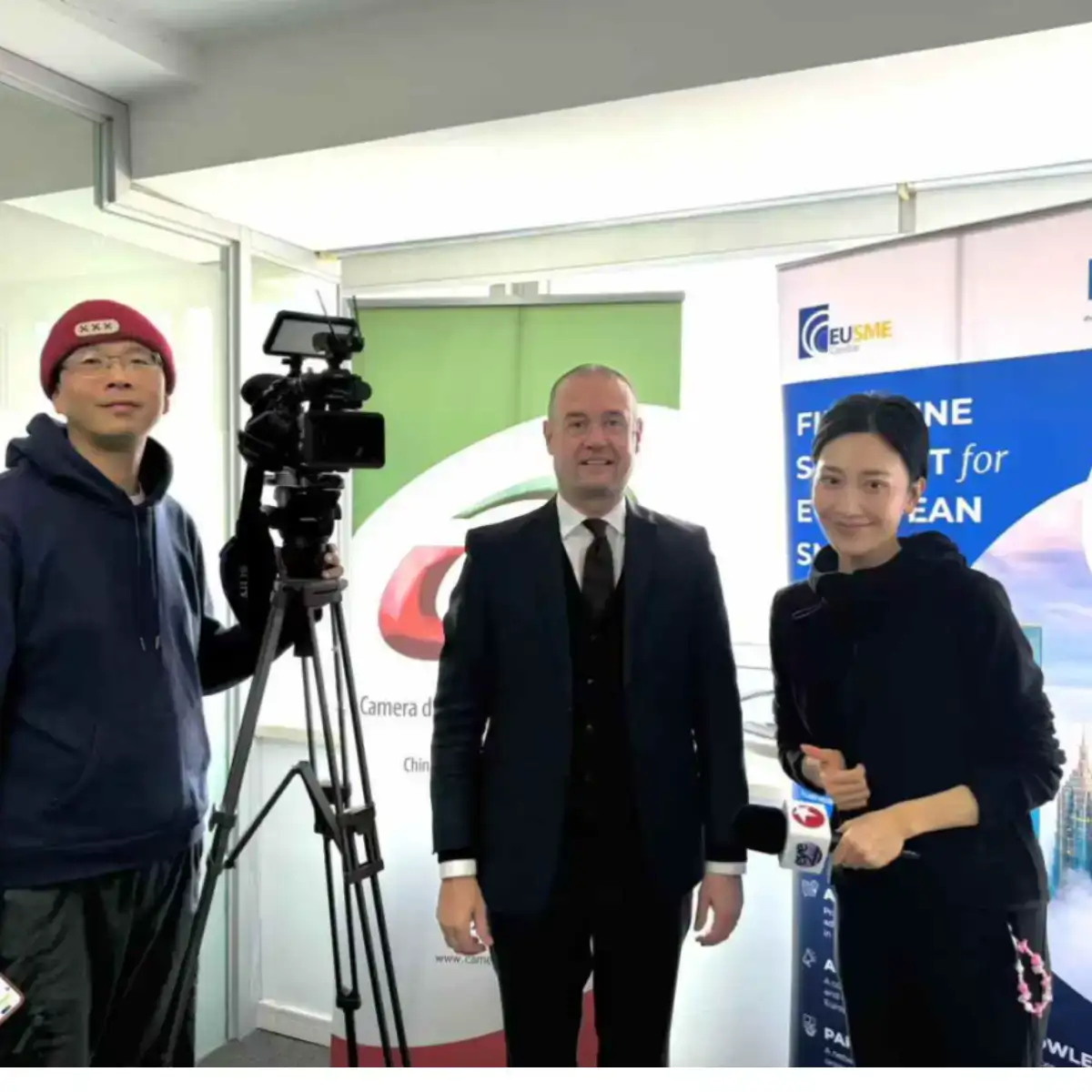
As part of a series of interviews organized by Shanghai TV to promote Italian and Chinese enterprises for the the Milano–Cortina 2026 Olympic and Paralympic Games, the Chairman of the Italian Chamber of Commerce in China (CCIC), Lorenzo Riccardi, took part in a feature focusing on the evolving cooperation between Milan and Shanghai. The discussion highlighted how the strongest current driver of bilateral engagement lies in the fusion of design, fashion, and advanced manufacturing, with both cities serving as gateways to premium consumers and dynamic innovation ecosystems. Lombardy, and Milan in particular, continue to play a central role, accounting for around €24.3 billion in Italy–China trade, while overall bilateral trade reached approximately €67–68 billion in 2024, confirming China as Italy’s main Asian market.
During the exchange, CCIC emphasized a key message for companies and institutions: Milan and Shanghai should be approached not merely as markets, but as long-term strategic partners. Successful engagement requires early investment in local design and branding, the support of trusted intermediaries, and patience in building durable relationships. This long-term approach is reflected in the presence of over 1,000 Italian companies active in the Shanghai consular area and an Italian FDI stock in China exceeding €12–15 billion, demonstrating how sustained commitment translates into lasting positioning and growth.
The conversation also addressed the role of Milano–Cortina 2026 as a catalyst for future cooperation. The Games have already opened new dialogues around tourism, winter sports, digital platforms, and licensing, with an expected infrastructure and business legacy of around €3 billion. Looking ahead, CCIC highlighted the potential for a more structured Milan–Shanghai platform focused on green technologies, design excellence, and sports-related innovation, noting growing interest from Chinese partners, including major groups developing Olympic-related initiatives and promotional activities in Shanghai.